
visual timetables for autism
Bring Calm Back To
Your Day
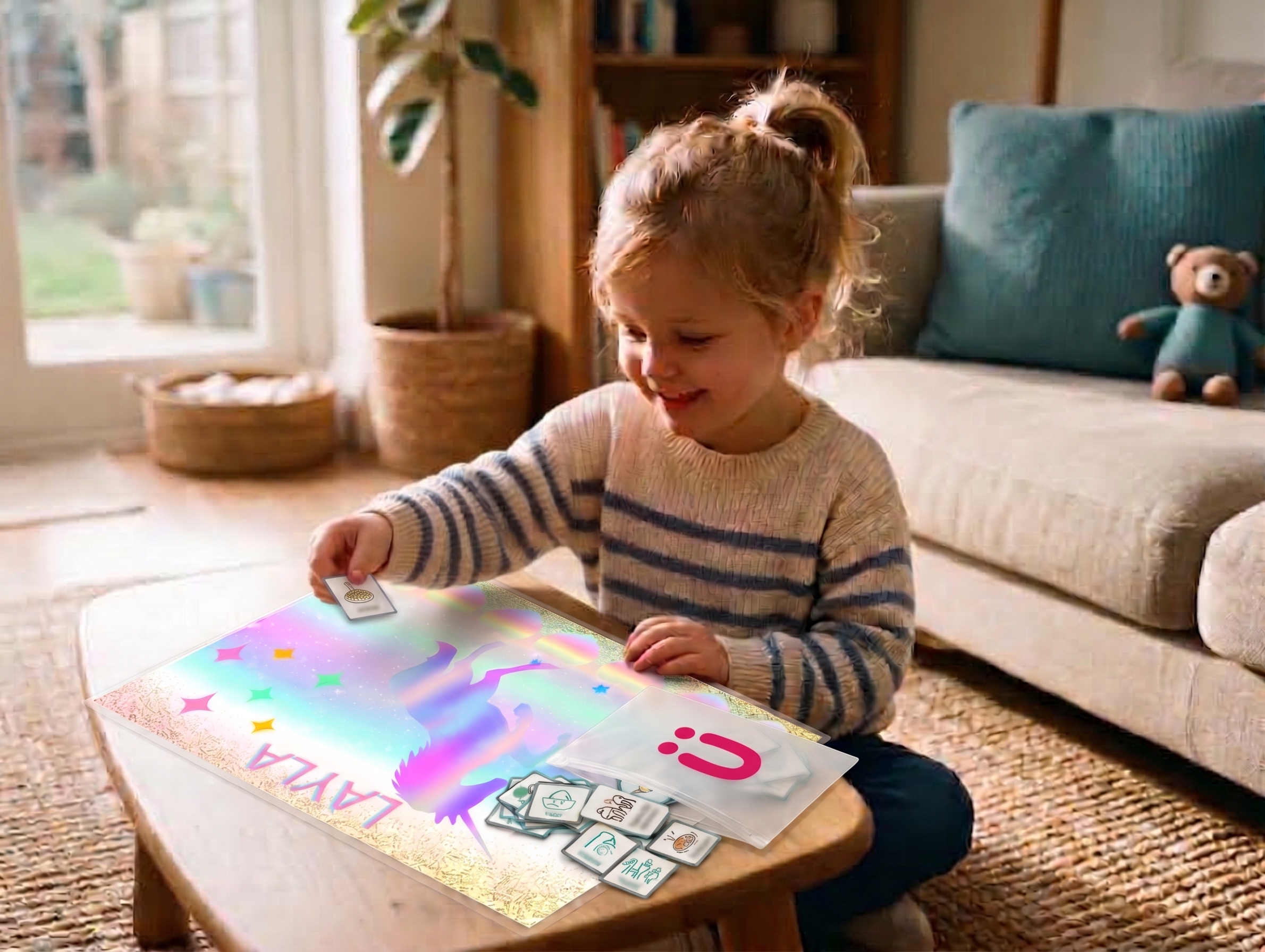
Turn chaotic mornings and overwhelming transitions into calm, predictable moments. Our personalised visual schedules help your child understand what's happening next, building the independence and confidence they need, while bringing a little more calm to the whole family.
PERSONALISED VISUAL SCHEDULES
A Calmer Routine In
Three Steps
Designed by parents who understand sensory overwhelm.
No complicated software, no rigid schedules, just clear, predictable visuals your child will love interacting with.

Choose Your Theme
Choose the theme that relates to your child's special interests, from transport and dinosaurs to space and nature. Something they'll recognise and enjoy straight away, so the whole idea feels exciting rather than unfamiliar.

Add Their Name
Personalise the header with your child's name, so their pack is made just for them and feels like theirs from the very first glance. A small detail, but one that makes a real difference to how they respond to something new.

Unbox And Begin
Once it arrives, pop it up somewhere they can see it all the time. Instead of repeating yourself throughout each day, they can check what's happening next for themselves, and things start to feel calmer for everyone.
Say Less, Show More.
NOW AND NEXT VISUALS
Now & Next Boards For
Everyday Routines
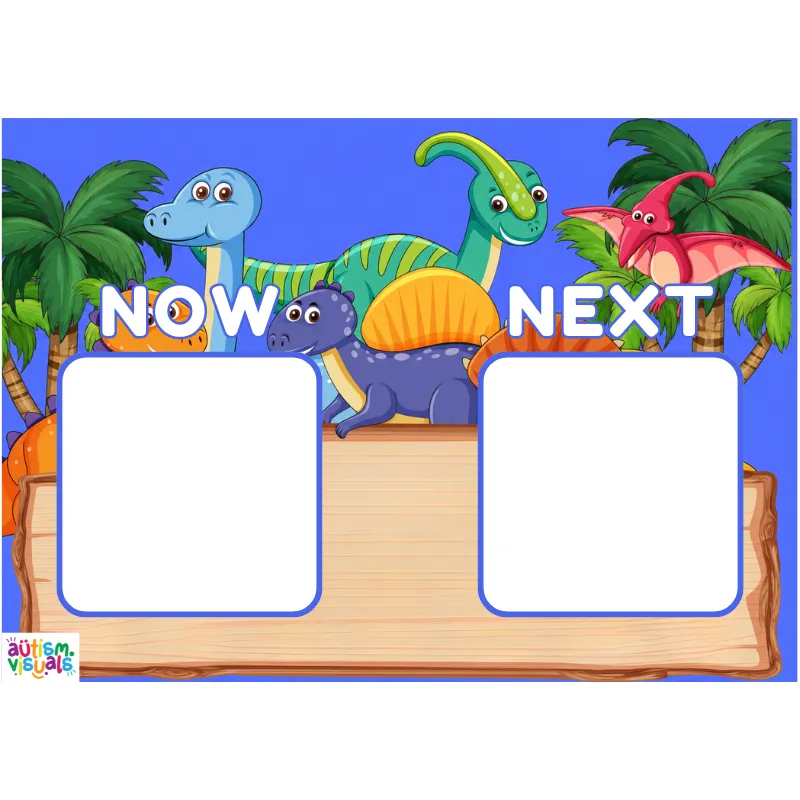
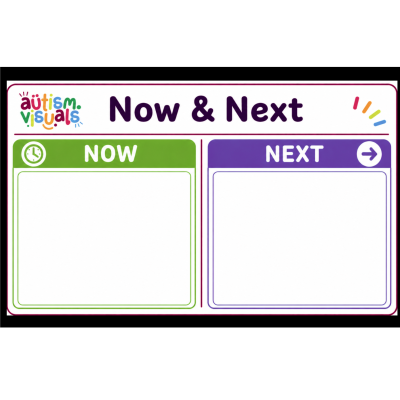
A now and next board gives your child a clear, simple way to see what's happening now and what's coming next, easing the anxiety and uncertainty that change can bring.
That clarity helps them feel calmer, more prepared, and more in control of their day, while making it easier for you to guide them through it together.

CALM ROUTINES, HAPPIER DAYS
See The Difference
When a child can see what's happening next, it becomes far easier for them to feel calm and ready.
Here's how swapping repeated verbal reminders for a simple visual routine can change the shape of an ordinary day.
Say Less, Show More.
VISUAL SCHEDULES
Visual Schedules
For a Calmer Daily Routine
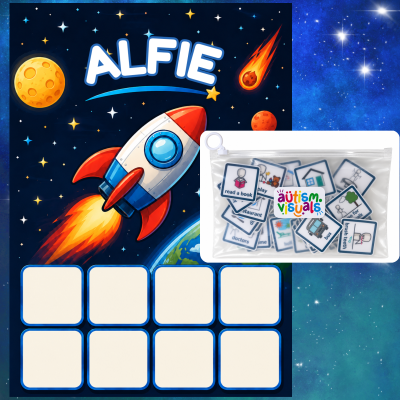
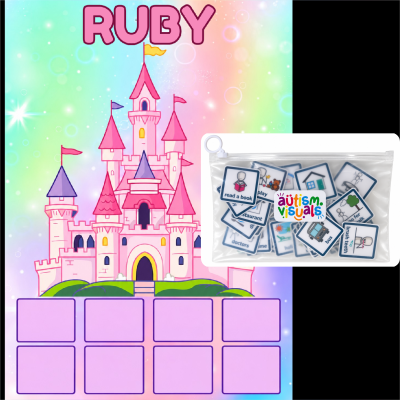
A personalised visual schedule lays out your child's whole day step by step, helping an autistic child understand their daily routine without it all needing to be explained in words.
It's one of our most useful family communication tools, easing transitions for autistic children from one activity to the next.

FAMILY COMMUNICATION TOOLS
Why Families Trust
Our Visual Schedules
Each schedule is designed as more than a nice-to-have, it's a genuine visual schedule to reduce meltdowns, giving your child something solid to check instead of a string of words to hold onto.
For many families, it becomes one of their most reliable calming tools for an autistic child facing change, turning an uncertain day into one they can see coming.

Helps Them Do It Themselves
Your child can check the board themselves and get on with their morning, without you needing to repeat each step, and positively encourages independence.
Eases Changes In Activities
Moving from playtime to mealtime or bedtime becomes something they can see coming, rather than something that catches them by surprise.
Calms The School Run
Getting out the door feels calmer when coats, shoes, and bags are laid out clearly on their board, so everyone knows what's needed, and anxieties are lessened.
Say Less, Show More.
VISUAL SCHEDULES
Your Questions
We know trying something new can feel overwhelming when daily routines are already delicate. Here are clear, honest answers to help you feel confident in bringing calm structure into your home.
Download our free guide to using visual supports for autism before you get started.
What is a visual timetable for autism?
A visual timetable uses pictures or symbols to show a child what's happening now and what's coming next, rather than relying only on spoken instructions. For autistic children, seeing the day laid out visually can make routines feel more predictable and far less overwhelming.
Will this work for my non-verbal or pre-verbal child?
Yes, absolutely. Visual schedules remove the heavy cognitive load of processing spoken language. Because the illustrations use simple, clear shapes without overwhelming visual clutter, your child can quickly point, understand what comes next, and feel safe in their day without needing to speak or read.
What age can my child start using a visual timetable?
There's no set age, it depends on what your child is ready for rather than how old they are. Many families start with something as simple as a two-step now and next board, then build up to a fuller daily timetable once their child is used to the idea.
How do I introduce a visual schedule to my child?
Start small rather than planning out the whole day at once. Begin with a predictable moment like bedtime or getting ready in the morning, using just two or three pictures, and let your child remove or move each one as it's completed so they can see their own progress.
What's the difference between a visual timetable and a now and next board?
A now and next board shows just the current activity and the one immediately after it, making it a gentle starting point for children who are new to visual supports. A full visual timetable extends that same idea across a longer stretch of the day, once your child is comfortable with the simpler version.
Can visual schedules help with meltdowns and transitions?
Many parents find that having a clear, visual sense of what's coming next reduces the uncertainty that often triggers meltdowns during transitions. It won't remove every difficult moment, but knowing what's ahead gives a child something concrete to hold onto instead of a sudden, unexplained change.
What if my child doesn't want to use their visual schedule at first?
It's common for a new routine to take a little time to settle in, so try not to worry if it doesn't click straight away. Keep sessions short and low pressure to begin with, involve your child in choosing pictures or placing the cards themselves, and build up gradually rather than expecting it to work perfectly from day one.

Say Less, Show More
Empowering neurodivergent children and their families across the UK with personalised, visual timetables designed to bring predictability, confidence, and peace to daily routines.
Contact: [email protected] | UK Dispatch: Made in Britain | Registered Company: 15492423